

|
|
|
© Dirk Biddle
It is important to know that each and every B-cell (and there are many millions in the body at any one time) has a different antibody on its surface. Each B-cell is programmed to make one specific antibody, thus each individual can recognise over a million different antigens. When a B-cell encounters its triggering antigen (along with collaborating T-cells and accessory cells), it gives rise to many large plasma cells (see Fig. 2). Every plasma cell is essentially a factory for producing antibody. Each of the plasma cells descended from a given B-cell (which are all members of the same family, or clones) manufactures millions of identical antibody molecules and pours them into the bloodstream.
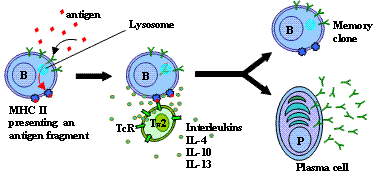
© Dirk Biddle 2005
-------------
| back |
Antibody: Any of a large number of proteins of high molecular weight that are produced normally by specialized B-cells after stimulation by an antigen and act specifically against the antigen in an immune response, that are produced abnormally by some cancer cells, and that typically consist of four subunits including two heavy chains and two light chains - called also immunoglobulin. (M+)
Antigen: A (usually) protein or carbohydrate substance (as a toxin or enzyme) capable of stimulating an immune response. (M+)